Deadstock Denim Jeans: Why Limited Fabric Creates Better Limited-Run Denim

Olivia Black • September 17, 2026

Share this article

Quick Answer

Deadstock denim jeans are jeans made from leftover, unused denim fabric that was never fully used in production. They are often limited in quantity, which can improve exclusivity and reduce waste. For shoppers, deadstock denim jeans can offer distinctive texture, better craft focus, and a more considered approach to buying.

Deadstock denim jeans sit at the point where style, scarcity, and waste reduction meet. The phrase refers to jeans made from leftover denim that already exists, rather than fabric woven for a fresh mass run. That means every cut matters, every metre is accounted for, and the final pair often feels more intentional. For Olivia Black, that logic fits neatly with limited-run, gender-fluid design and the Weaver Jeans story. If you want to see how that idea extends across the wider collection, explore sustainable denim in the UK and the Weaver Jeans product page. In this guide, we’ll explain what deadstock denim jeans are, why they are naturally limited, and what to check before you buy. We’ll also cover fit, fabric quality, and care, so your next pair feels as good as it looks.

What Are Deadstock Denim Jeans?

Deadstock denim jeans are jeans made from surplus denim fabric that was never used in its original production run. In simple terms, the cloth already exists, so the garment starts with a finite material supply. That is why deadstock denim jeans often come in small batches, with slight variations that make each release feel special.

This is different from standard bulk denim. Mass production usually orders fabric to match a forecast. Deadstock uses what is already available. As a result, the design process becomes more precise. Pattern cutting, fit decisions, and finish choices all matter more because there is less margin for waste.

If you want a broader explanation of the material itself, Olivia Black’s deadstock denim jeans guide is a useful companion piece. You can also compare the design logic with limited-run clothing, which explains why small-batch fashion often feels more personal.

Deadstock denim jeans are not automatically vintage, and they are not the same as recycled denim. Vintage usually means previously worn. Recycled denim has been reprocessed into new fibre or fabric. Deadstock means unused surplus fabric. That distinction matters, especially if you are buying for fit, texture, and provenance.

For shoppers who like to see how other makers use archive fabric, the material-focused listings at Good Fabric’s deadstock denim fabric page and Stone Mountain Fabric’s designer deadstock denim show how surplus cloth moves into new garments.

Deadstock denim jeans appeal to buyers who want clothing with a story, but also with structure. That combination is what makes the category so strong for premium denim. The cloth is limited. The production is focused. The result can feel sharper than a standard seasonal launch.

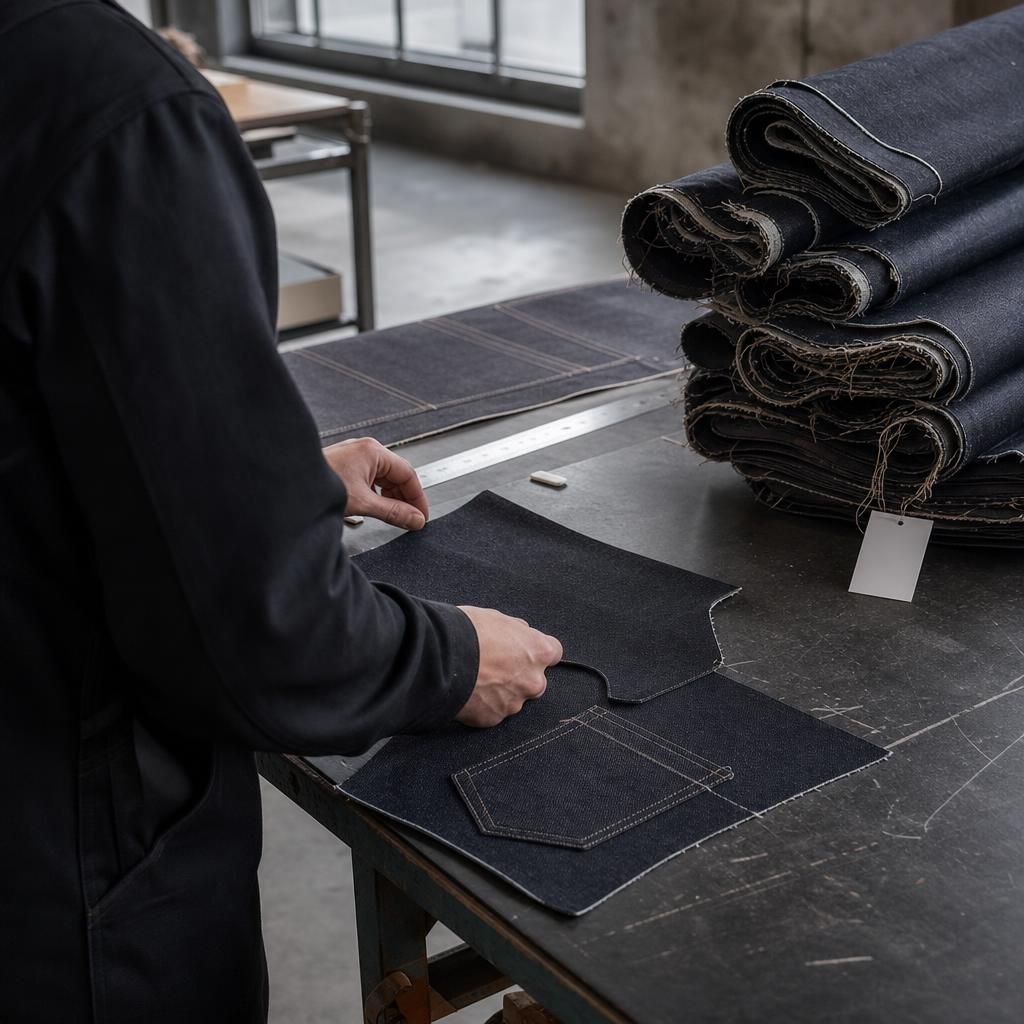
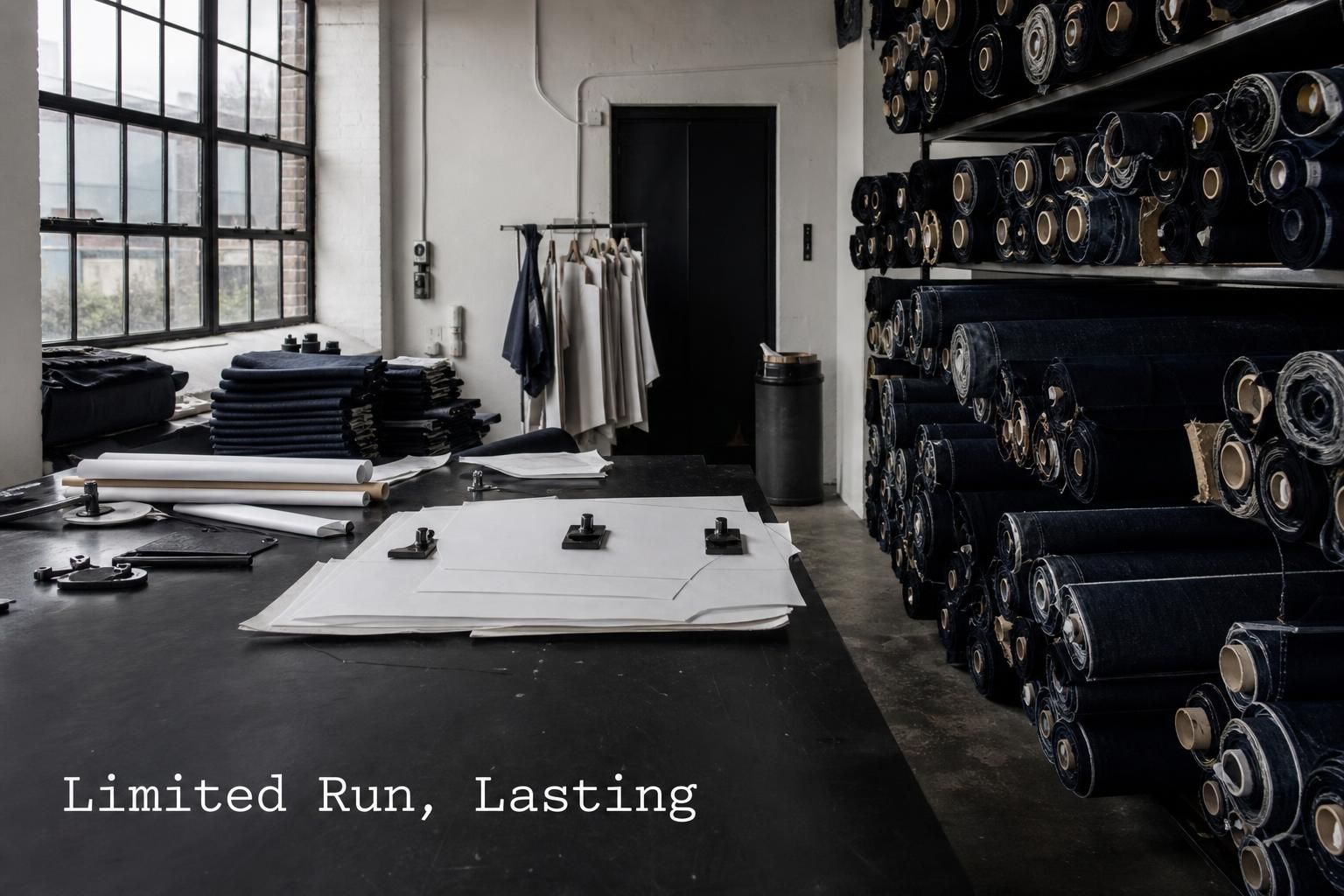
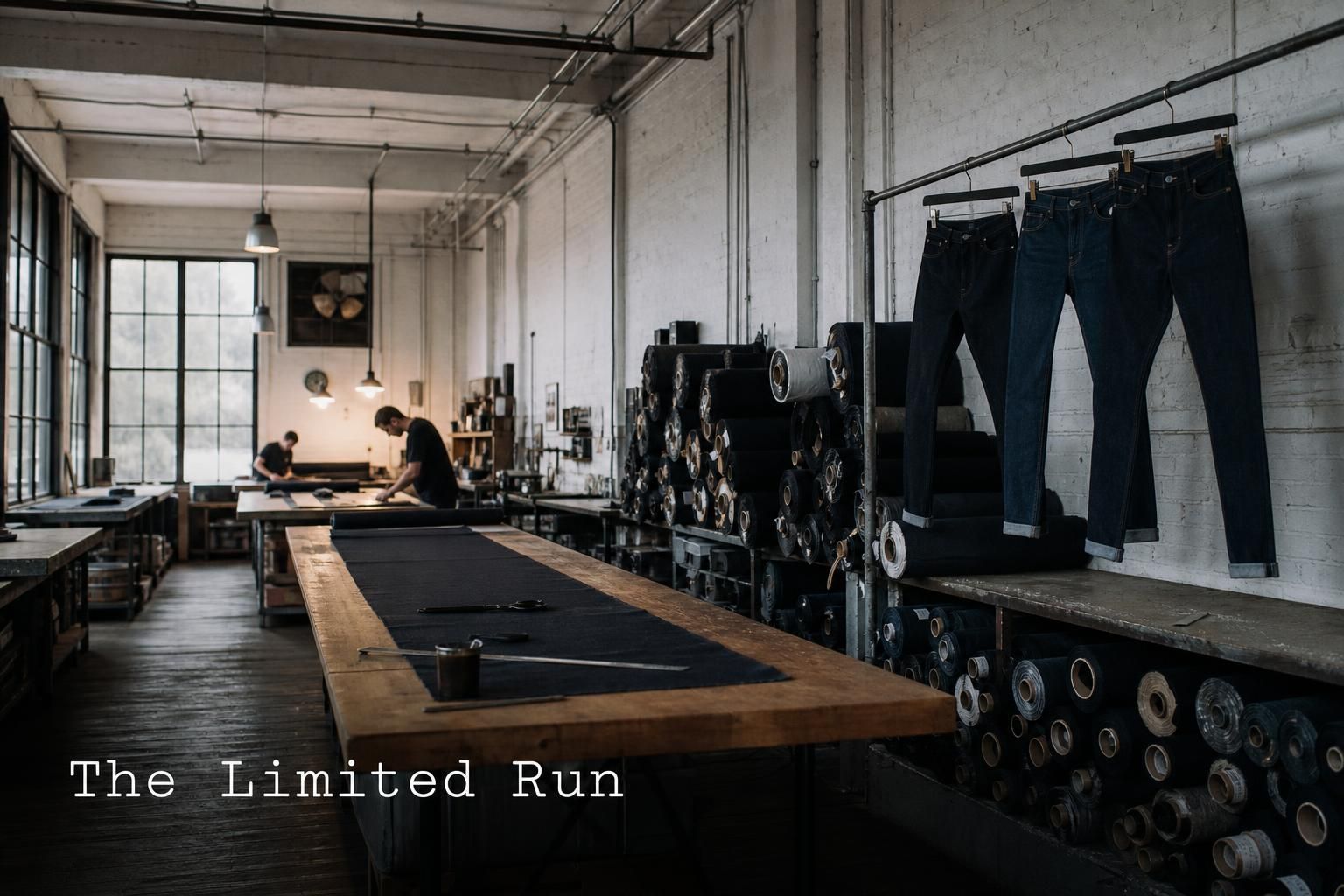
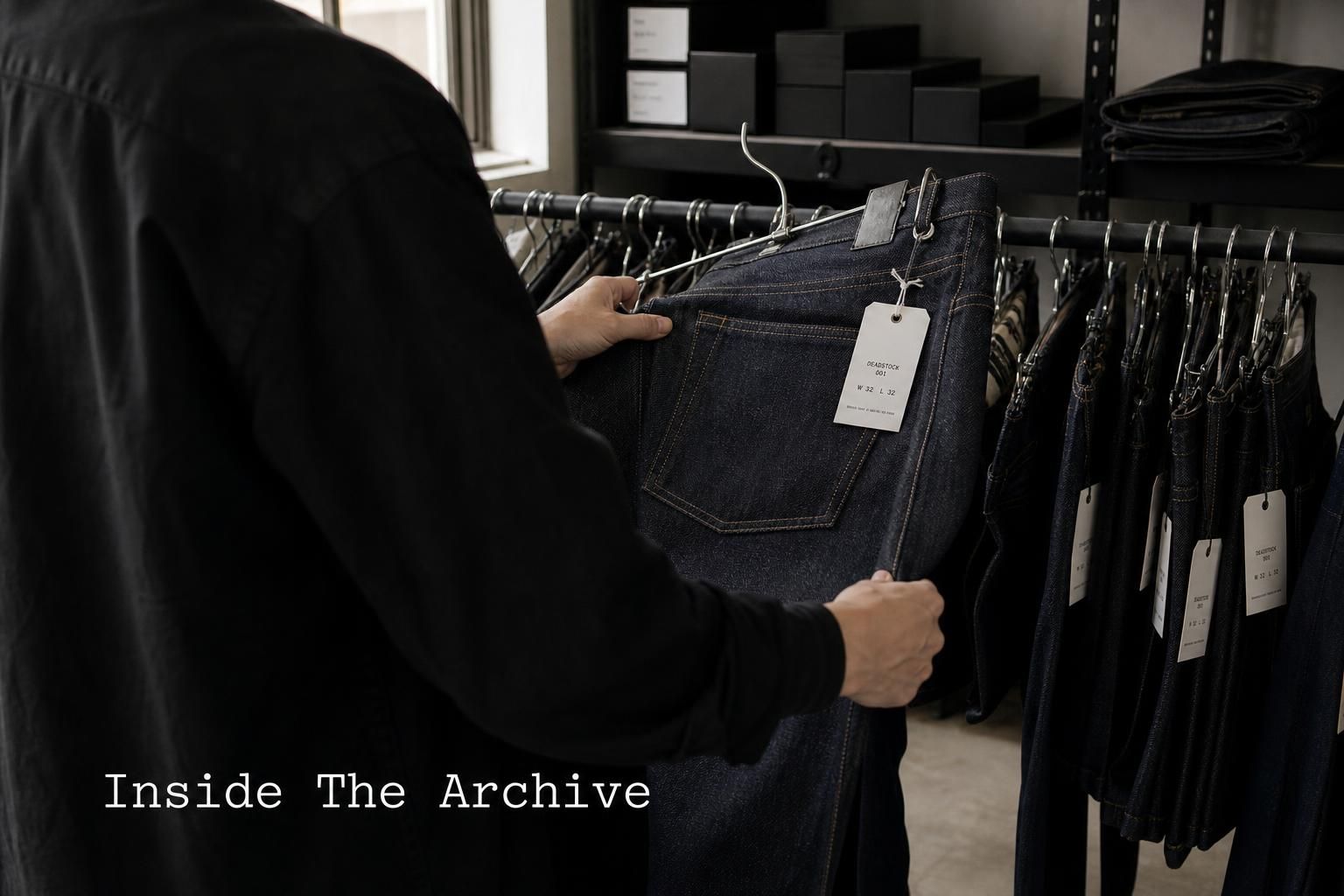
Hands sorting deadstock denim on a cutting table 

How does deadstock fabric work in denim design?

Deadstock fabric works by giving designers a fixed material pool. Instead of ordering more cloth later, they build the run around what already exists. That pushes smarter pattern planning and more disciplined production.

For deadstock denim jeans, this often means tighter decision-making on rise, leg shape, pocket placement, and hardware. Therefore, the design has to respect the material from the start.

Why Deadstock Denim Jeans Are Naturally Limited-Run

Deadstock denim jeans are naturally limited-run because the fabric supply is fixed. Once the fabric is used, that exact cloth cannot be reordered in the same way. Therefore, the run ends when the material ends.

That scarcity is not a marketing trick. It is built into the supply chain. If a designer only has enough cloth for a narrow batch, the collection stays small by nature. This is one reason limited-run denim can feel more special than open-ended stock. It also encourages quicker decision-making from the customer, because the product may not return in the same fabric.

Olivia Black leans into that logic across the brand. The same approach appears in sustainable luxury fashion and in pieces such as the Weaver Denim Jacket, where material choice and cut work together. If you are building a low-waste wardrobe, deadstock denim jeans can sit alongside other versatile pieces that rewear well.

Scarcity also affects design quality. When fabric is limited, waste has to be reduced at the cutting stage. That means smarter layouts, careful grading, and fewer casual compromises. In practice, the final pair often feels considered rather than overproduced.

For a wider view of why this matters, slow fashion London offers a clear framework for buying less and choosing better. Meanwhile, the article deadstock fabric clothing explains how existing materials can reduce pressure on new production.

If you want to see how archive fabric can be reimagined by a denim brand, this overview from Long John on deadstock jeans and rarity is a helpful external reference. It also shows why collectors and style-led buyers value limited supply.

Before you buy deadstock denim jeans, ask one simple question: does the limited run add meaning, or just urgency? The best pieces do both. They offer a genuine material story, and they reward the wearer with a stronger sense of ownership.

Why is deadstock fabric so expensive?

Deadstock fabric can be expensive because it is usually available in smaller quantities and often comes from premium mills or designer surplus. The fabric is not priced like mass stock, and the available metreage may be uneven.

That makes planning harder and increases production care. In deadstock denim jeans, that extra attention often shows up in the final fit and finish.

What to Check Before Buying Deadstock Denim Jeans

Deadstock denim jeans are worth buying when the fabric, fit, and care requirements suit your wardrobe. Because the material is limited, you should check the details before you commit.

The first thing to look for is transparency. A strong product page should explain the fabric source, the cut, and how the garment was made. It should also tell you whether the denim has stretch, whether it is rigid, and how the jeans are intended to sit on the body. Olivia Black’s ethical fashion London guide is a practical place to start if you want to ask better questions before buying.

The next step is to think about styling. Deadstock denim jeans should work with the rest of your wardrobe, not just one outfit. They pair well with a simple shirt, an oversized jacket, or a fluid silhouette. For that kind of balance, the Maglen Dress and Feather Trouser show how Olivia Black builds separation between structure and movement.

If you are watching premium denim buying advice, it is also worth viewing the first video below before you spend heavily on a pair.

The biggest rule is this: buy deadstock denim jeans for the fabric and construction, not only for the scarcity. Scarcity can be exciting, but fit lasts longer than hype. Good denim should hold shape, move well, and feel wearable across seasons.

Fit and measurements

Fit matters most because deadstock denim jeans may not return in the same fabric. Check waist, rise, hip, thigh, and inseam measurements carefully.

Compare the garment measurements, not just the label size. If the jeans are rigid denim, allow for less give. If they include stretch, expect a different break-in feel.

Fabric quality

Fabric quality should be obvious in the hand and in the weave. Look for a denim surface that feels stable, not flimsy, and ask how the cloth was sourced.

If the brand shares details about weight, mill, or composition, that is a good sign. Better deadstock denim jeans make those details clear.

Care requirements

Care requirements vary, but premium denim usually lasts longer when washed less often and handled gently. Follow the label, and avoid over-washing to preserve colour and structure.

That is especially important for deadstock denim jeans, because the fabric may be finite and harder to replace. Care extends the life of the original cloth.

Shop Deadstock Denim Jeans with Weaver Jeans

Deadstock denim jeans make the most sense when they are designed with a clear fit philosophy. Weaver Jeans does that by combining limited-run fabric with a shape-driven approach that suits fluid wardrobes.

If you want the product itself, start with Weaver Jeans. If you want the wider brand context, the main Olivia Black homepage shows how the collection connects denim, tailoring, and gender-fluid design.

What makes Weaver Jeans relevant is not only the deadstock story. It is the balance between wearability and character. Deadstock denim jeans should look distinctive, but they also need to move through real life. That means a clean silhouette, practical construction, and enough versatility to work with shirts, jackets, or softer separates.

For a deeper look at how the brand frames denim as part of a broader sustainable wardrobe, sustainable designer denim is a useful next stop. You can also compare the thinking behind denim with gender fluid fashion, which helps explain why cut and expression matter together.

If you like to see how archive denim is presented in a modern collection format, the second video below is a useful visual reference.

In practice, the best deadstock denim jeans are the ones you reach for often. They should feel special without becoming difficult. That is where Olivia Black’s design language works well. It treats limited fabric as an opportunity for sharper decisions, not a constraint to hide.

Is it better to buy deadstock or new?

Neither is automatically better. Deadstock is often better when you want limited-run character and lower material waste, while new fabric can be better when you need a specific finish or repeatable size availability.

For deadstock denim jeans, the right choice depends on whether you value scarcity, unique fabric, and small-batch making more than easy restocking.

Key Takeaways

  • Deadstock denim jeans are made from leftover, unused denim fabric, which makes each run finite.
  • Scarcity in deadstock denim jeans comes from material limits, not artificial hype.
  • Fit, fabric quality, and care matter more than urgency when buying deadstock denim jeans.
  • Weaver Jeans fits the deadstock model well because it combines limited fabric with a considered silhouette.
  • The best deadstock denim jeans feel special, wearable, and easy to style across seasons.

Frequently Asked Questions

What does deadstock denim mean?

Deadstock denim means unused denim fabric that was left over from an earlier production plan. Deadstock denim jeans are made from that existing cloth rather than newly ordered bulk fabric. That usually makes them more limited and more distinctive, because the exact material cannot be produced again in the same way.

Why is deadstock fabric so expensive?

Deadstock fabric can cost more because it is usually available in smaller, less predictable quantities. It is often sourced from premium mills or leftover designer stock, so the material itself can already be special. In deadstock denim jeans, that scarcity also means more careful planning, which can raise the value of the finished pair.

What's the name of the jeans that cost $10,000?

There is no single official pair with one permanent name. The $10,000 headline usually refers to rare collector jeans, luxury archive pieces, or one-off denim with unusual provenance. Deadstock denim jeans are not typically in that category, but they can still feel premium because of the fabric story and the limited run.

Is it better to buy deadstock or new?

It depends on your goal. Deadstock denim jeans are a strong choice if you want limited-run appeal, a lower-waste fabric story, and something less common. New denim may be better if you need consistent restocks, specific wash options, or a larger size range. Fit and wearability should guide the decision.

Recent Posts

By Olivia Black September 22, 2026
what is gender fluid clothing is a question many style-conscious shoppers are asking as fashion moves beyond fixed menswear and womenswear rules. At its simplest, it means clothing that lets you dress for your body, mood, and identity rather than a label. That can look sharp, soft, tailored, oversized, draped, structured, or all of those at once. For Olivia Black, the idea sits at the centre of sustainable designer dressing, where limited-run pieces are made to be worn across contexts, not…
Gender Fluid Clothing UK: Independent Designer Pieces Made for Expressive Dressing
By Olivia Black September 21, 2026
Gender fluid clothing UK is about choosing clothes that reflect you, not a fixed label. For UK shoppers, that often means designer pieces with stronger fabric, better fit, and a clearer point of view. Olivia Black creates sustainable gender-fluid fashion in limited runs, with garments designed for movement, styling flexibility, and repeat wear. If you want pieces that feel contemporary and individual, this is where expressive dressing gets practical. Explore the brand’s approach on Olivia…
By Olivia Black September 20, 2026
Deadstock denim jeans are not just another denim trend. They are a design choice, a sourcing choice, and, often, a more thoughtful way to buy clothes. In simple terms, deadstock denim jeans are made from existing fabric that was left unused, which means every run begins with a finite material supply. That scarcity changes everything: the fit decisions, the wash choices, the production scale, and even the way a pair feels when you wear it. For Olivia Black, deadstock denim jeans sit at the…
By Olivia Black September 19, 2026
Deadstock denim jeans are a smart answer to modern shopping fatigue. They use existing fabric, so the garment starts with a built-in sustainability advantage and a more exclusive feel. For Olivia Black, deadstock denim jeans are not a trend story. They are a design language for limited-run fashion, gender-fluid dressing, and pieces that feel intentional from the first wear. The Weaver Jeans show that clearly. They sit within a wider world of slow fashion, premium denim, and expressive…
Non-Binary Clothing UK: Sustainable Pieces for Free Gender Expression
By Olivia Black September 18, 2026
Non binary clothing UK shoppers are usually looking for more than a loose fit or a neutral colour palette. They want clothes that feel deliberate, expressive, and wearable in real life. That means better cuts, better fabrics, and pieces that move beyond the usual unisex basics. At Olivia Black, the focus is sustainable gender-fluid design with a London point of view. The aim is not to hide the body or flatten style. It is to give you clothes that can read soft, sharp, formal, or relaxed…
Ethical Fashion London: What Conscious Shoppers Should Ask Before Buying
By Olivia Black September 16, 2026
Ethical fashion London is not just about buying less. It is about buying with sharper questions, better taste, and more respect for the people and materials behind a garment. In a city full of showrooms, boutiques, and online drops, the real skill is knowing how to tell a thoughtful label from a polished story. That means checking transparency, fabric choice, production scale, and whether a piece will still feel relevant after the season changes. If you want a practical place to start, Olivia…
Olivia Black: London Fashion Designer Creating Sustainable Gender-Fluid Clothing
By Olivia Black September 15, 2026
Olivia Black is a London fashion designer building a sharper, more inclusive idea of luxury. The brand creates sustainable gender-fluid clothing that feels expressive, practical, and designed for real wardrobes. That means limited-run pieces, deadstock textiles, and silhouettes that move beyond binary dressing without losing polish. If you want to explore the label first, start with the Olivia Black story and studio approach, then look at the garments themselves. The collection includes denim…
Sustainable Luxury Fashion: Why Limited-Run Designer Clothing Matters
By Olivia Black September 14, 2026
Sustainable luxury fashion is not about selling a greener story with the same old habits. It is about designing premium clothing with fewer compromises, fewer leftovers, and a longer life in the wardrobe. For style-conscious buyers, that difference matters. It shapes how a piece feels, how often you wear it, and whether it still looks relevant after the trend cycle moves on. Olivia Black’s approach to sustainable luxury fashion is a useful proof point because it focuses on limited-run…
Gender-Fluid Jeans: How to Find Denim That Fits Your Style, Not a Binary
By Olivia Black September 13, 2026
Gender fluid jeans are for people who want denim that follows the body, not a label. That means fit comes first, then styling, then the story behind the fabric. For Olivia Black, the goal is simple: make jeans that feel expressive, wearable, and easy to shop without being pushed into menswear or womenswear categories. If you are building a wardrobe around identity, comfort, or sustainability, gender fluid jeans can be the anchor piece that everything else hangs from. They work best when you…
By Olivia Black September 12, 2026
Deadstock denim jeans are a simple idea with a bigger fashion story behind them. They use existing denim that was never cut into a garment, which can help reduce waste and make each run feel more considered. For style-conscious shoppers, that matters because the best clothes are the ones you actually want to wear again and again. In Olivia Black’s world of sustainable, gender-fluid dressing, deadstock denim jeans sit at the point where design, responsibility, and expression meet. They are also…
Show More