Deadstock Denim Jeans: Limited-Run Jeans Made from Existing Fabric
Quick Answer
Deadstock denim jeans are jeans made from existing, unused denim fabric that was already produced but never cut into garments. They offer a limited-run, lower-waste way to buy distinctive denim, and deadstock denim jeans often appeal to shoppers who want craftsmanship, scarcity, and more thoughtful material use.
Deadstock denim jeans are made from fabric that already exists, which gives them a very different feel from standard seasonal denim drops. The result is limited-run denim with character, lower material waste, and a more intentional buying experience. For style-conscious shoppers, that matters. It means deadstock denim jeans can support both design expression and a lighter footprint, without losing the utility people want from great jeans. At Olivia Black, that idea sits naturally beside pieces like the Weaver Jeans and the wider approach to sustainable, gender-fluid clothing. If you are exploring deadstock denim jeans for the first time, think of them as practical, collectible, and design-led at once. They are not about chasing hype. They are about making better use of what already exists, while creating garments that feel rare, wearable, and made for real wardrobes.
What Are Deadstock Denim Jeans?
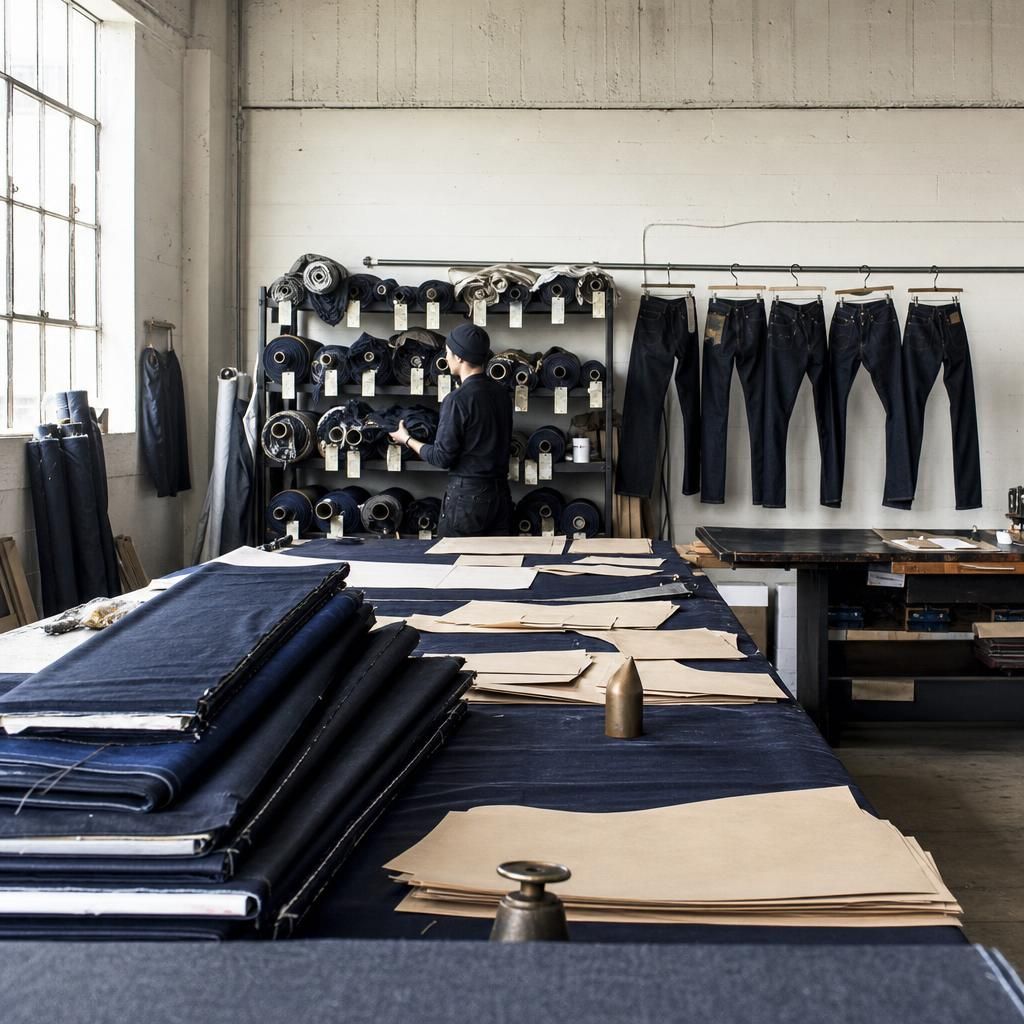
Deadstock denim jeans are jeans made from leftover, unused denim fabric. In simple terms, the cloth was produced for a brand, mill, or factory, but it was never used in the original planned run.
That is why deadstock denim jeans matter. They turn an existing material into a new garment instead of requiring fresh fabric to be woven for every pair. For buyers, that usually means a shorter run, a more distinctive cloth, and a stronger sense of rarity. It also means the fabric can have a story before the jeans even leave the studio.
This idea is often confused with vintage denim. However, vintage usually refers to old garments, while deadstock refers to unused fabric or unworn stock. For a plain-language guide to the broader material category, Olivia Black’s Deadstock Clothing UK guide explains why limited-run fabrics matter in modern fashion.
If you want a wider view of the category, the deadstock fabric listings at deadstock fabric at K&R London show how many studios source existing cloth for new design work. Meanwhile, archive-focused denim examples on Deadstock Jeans on Etsy UK show how demand has grown for one-off and limited pairs.
Deadstock denim jeans are also useful for brands that care about fit and character. Because each fabric batch is finite, design decisions must be sharper. That often leads to more focused collections and better use of the cloth. At Olivia Black, this aligns with the design logic behind deadstock fabric clothing and the studio’s limited-run approach.
How does deadstock denim work in practice?
Deadstock denim jeans begin with an existing bolt of fabric. The studio plans the cut, fits the pattern to available yardage, and produces only what the cloth allows.
That process is practical as well as creative. It reduces overproduction pressure, but it also means each release can feel more personal. Because the fabric supply is finite, deadstock denim jeans may not return in exactly the same form.
Why Existing Denim Fabric Can Reduce Waste
Existing fabric can reduce waste because it gives new life to material that might otherwise sit unused. Deadstock denim jeans are a direct example of that approach.
When a brand chooses deadstock denim jeans, it is working with what has already been made. That can help avoid the need for fresh production on every style drop. It also makes sense for independent labels that prefer limited runs over mass output. For readers who want the bigger sustainability context, Olivia Black’s A Sustainable Fashion Brand UK guide explains how limited-run design fits a lower-waste model.
This does not mean deadstock denim jeans are automatically “perfect” or impact-free. It does mean the material has already entered the supply chain, so using it well is a more thoughtful choice than leaving it idle. That is why deadstock denim jeans appeal to many sustainable fashion buyers. The value is in better material use, not marketing language.
For a useful outside view of the fabric category, Good Fabric’s recycled cotton denim fabric resource shows how denim can be reused and repurposed in creative production. In a similar way, deadstock denim jeans transform existing cloth into a new wardrobe staple.
That is also why the language around deadstock denim jeans matters. The phrase tells you the jeans are not based on endless replenishment. Instead, they belong to a more deliberate production model. For many shoppers, that feels more honest and more desirable.
Why does scarcity matter in deadstock denim jeans?
Scarcity is part of the appeal. Because the fabric is limited, deadstock denim jeans often become a one-time opportunity rather than a permanent stock item.
That can sharpen the design story. It also encourages quicker, more intentional buying decisions. If you love the cloth, the fit, and the construction, waiting too long may mean the run disappears.
Meet the Weaver Jeans
The Weaver Jeans are Olivia Black’s answer to deadstock denim jeans with a modern, gender-fluid fit. They are designed to feel expressive, wearable, and rooted in limited-run logic.
If you are looking for deadstock denim jeans that can work across casual styling, sharper layering, and everyday wear, the Weaver Jeans are the natural place to start. They sit comfortably inside a wardrobe that values shape, drape, and ease without fixing anyone into a single silhouette.
That matters because deadstock denim jeans are not just about the fabric. They are also about how the garment moves on the body. A good deadstock pair should feel considered in the rise, leg line, and finish. It should look distinct, but it should still work hard in real life.
For shoppers building a wider expressive wardrobe, the jeans can sit alongside Weaver Denim Jacket for a tonal set, or with the softly tailored Feather Trouser when you want a different line altogether. That is the advantage of design-led deadstock denim jeans. They can anchor a look without becoming one-note.
You can also watch how archive fabric becomes something new in the video
. It is a useful reference point for understanding how deadstock denim jeans can move from stored material into a fresh collection.
Olivia Black’s broader studio approach is outlined on the about page, where limited-run, inclusive design is central to the brand’s point of view.
What makes Weaver Jeans different?
Weaver Jeans are designed as a limited-run piece, so the fabric choice shapes the final release. That makes them a strong example of deadstock denim jeans done with purpose.
They are not built to imitate mass-market denim. Instead, they focus on fit, texture, and a more individual feel. That is exactly why deadstock denim jeans can work so well in a curated wardrobe.
How Deadstock Denim Affects Limited Availability
Deadstock denim jeans are limited because the fabric supply is fixed. Once that cloth is used, the same exact run may never be repeated.
This is a defining feature, not a drawback. For some shoppers, it is the whole point. Deadstock denim jeans feel more personal when you know the material was chosen for a specific release. The trade-off is simple: more character, less predictability.
That also changes how you shop. If you find deadstock denim jeans that fit your style, it is smart to decide quickly. Waiting can mean losing the fabric, the size, or the exact wash. For shopping guidance, Olivia Black’s gender-fluid clothing brands guide is useful because it explains what to look for in inclusive, design-led labels.
For a wider discussion of archive denim culture, Long John’s article on why deadstock jeans are coveted gives helpful context on collector interest and material rarity. You can also see how secondhand and deadstock searches are used in the market through denim deadstock listings on eBay UK.
To make the most of limited runs, think in outfit systems. Deadstock denim jeans work best when you know which tops, shoes, and outer layers you will wear them with. That keeps the purchase intentional. It also makes the jeans easier to live with over time.
A helpful real-world comparison is the video
. It shows how deadstock vintage jeans differ from worn-in pairs, which helps clarify why deadstock denim jeans are valued for condition and rarity.
How should you shop a limited run wisely?
Start with fit, fabric feel, and how often you will wear the jeans. Then check the cut against your wardrobe.
If the piece will pair with several outfits, deadstock denim jeans become more versatile. That makes the limited nature feel like an asset, not a limitation.
Styling Deadstock Denim Jeans in a Gender-Fluid Wardrobe
Deadstock denim jeans are easy to style in a gender-fluid wardrobe because they can shift tone with the rest of the outfit. They are strong enough to stand alone, but flexible enough to support many expressions.
That flexibility is why deadstock denim jeans work so well at Olivia Black. A boxy knit makes them feel relaxed. A sharper shirt changes the mood. A layered jacket adds structure. For more styling context, the guide to how to dress genderfluid is useful because it focuses on shape, mood, and expression rather than rules.
You can build a clean, creative look with deadstock denim jeans and a fitted top, or push them into a more directional silhouette with volume elsewhere. Meanwhile, a dressier layer such as the Maglen Dress can be styled differently for contrast if you want to move between categories rather than stay inside one.
This is where deadstock denim jeans feel especially modern. They do not need to signal one identity or one age group. Instead, they can support expression, ease, and polish at the same time. That makes them useful for Gen Z and Millennial wardrobes, especially when the goal is to look intentional without feeling overdone.
If you want to explore the brand’s wider style language, the Olivia Black homepage is a good starting point for connected pieces and related categories.
In practical terms, styling deadstock denim jeans is about balance. Keep one part of the outfit grounded and let one element feel more experimental. That gives the jeans room to work.
What jeans not to wear after 40?
There is no universal rule about what jeans not to wear after 40. The better question is whether the fit, rise, and wash suit your body and your style.
Deadstock denim jeans are especially helpful here because they focus on cut and quality rather than age-based rules. If the jeans feel comfortable and expressive, they are the right jeans to wear.
Fit, Sizing and Care
Fit and sizing matter more than labels when you buy deadstock denim jeans. Because the fabric runs are limited, you want to check measurements carefully before you commit.
Look at waist, rise, hip, and leg opening first. Then think about how you prefer denim to sit. Some people want a cleaner line. Others want a looser, more architectural shape. Deadstock denim jeans can support either approach if the cut is right.
Care matters too. Denim lasts longer when you wash it less often, air it out between wears, and follow the garment label. That is especially useful for deadstock denim jeans, because a limited-run pair deserves thoughtful wear. If you are also comparing outerwear, Olivia Black’s sustainable denim jacket guide is a useful companion piece for understanding durability and care.
A few simple care habits help:
- Wash only when needed
- Turn jeans inside out before laundering
- Use a gentle cycle and mild detergent
- Air dry whenever possible
- Store them folded or hung to preserve shape
Deadstock denim jeans reward careful ownership. The more considered the care, the better they age. That is part of the appeal. You are not buying throwaway denim. You are buying a garment made to be worn, repeated, and kept.
For readers who want the broader category explained, Olivia Black’s sustainable denim jeans UK guide is a useful follow-up after this article.
How do you choose the right size first time?
Use garment measurements, not just your usual size label. Limited-run deadstock denim jeans can vary more than standard mass-produced denim.
If you are between sizes, think about your preferred finish. A closer fit and a relaxed fit will behave very differently in denim.
Key Takeaways
- Deadstock denim jeans are made from existing unused denim fabric, which makes them a limited-run, lower-waste choice.
- Scarcity is a feature of deadstock denim jeans, so fit, measurements, and quick decision-making matter.
- Weaver Jeans are Olivia Black’s design-led example of deadstock denim jeans for a gender-fluid wardrobe.
- Deadstock denim jeans style easily with expressive, layered looks and can suit many bodies and identities.
- Care matters: wash gently, wear repeatedly, and treat limited-run denim as a long-term wardrobe piece.
Frequently Asked Questions
What does deadstock denim mean?
Deadstock denim means unused denim fabric that was produced but not used in the original production plan. When that fabric becomes jeans, you get deadstock denim jeans: limited-run pieces made from existing material rather than newly woven stock.
What jeans cost $100,000?
Usually, jeans that cost $100,000 are rare collector pieces, not regular retail denim. The price can come from historical value, provenance, celebrity ownership, or extreme scarcity rather than the jeans themselves being everyday wear.
What jeans not to wear after 40?
There is no fixed list of jeans to avoid after 40. The best jeans are the ones that fit well, feel comfortable, and suit your style, and deadstock denim jeans can work at any age because they are chosen for cut and expression rather than trend rules.
What are the big 3 denim brands?
People often mean Levi’s, Wrangler, and Lee when they say the big 3 denim brands. However, brand choice is less important than fit, fabric quality, and how often you will wear the jeans.
Are deadstock denim jeans a good buy?
Yes, if you value limited availability, lower-waste material use, and a more distinctive finish. Deadstock denim jeans are especially strong for shoppers who want something design-led, wearable, and less ordinary than mass-produced denim.